
Cochlear Implants in Children: Restoring the Gift of Sound
Hearing is fundamental to how children learn, communicate, and connect with the world around them. When a child experiences severe or profound hearing loss, the impact can reach every aspect of their development, from speech and language acquisition to social skills and academic performance.
For families navigating this diagnosis, a cochlear implant can be a life-changing option. Here is what parents need to know.
What is a Cochlear Implant?
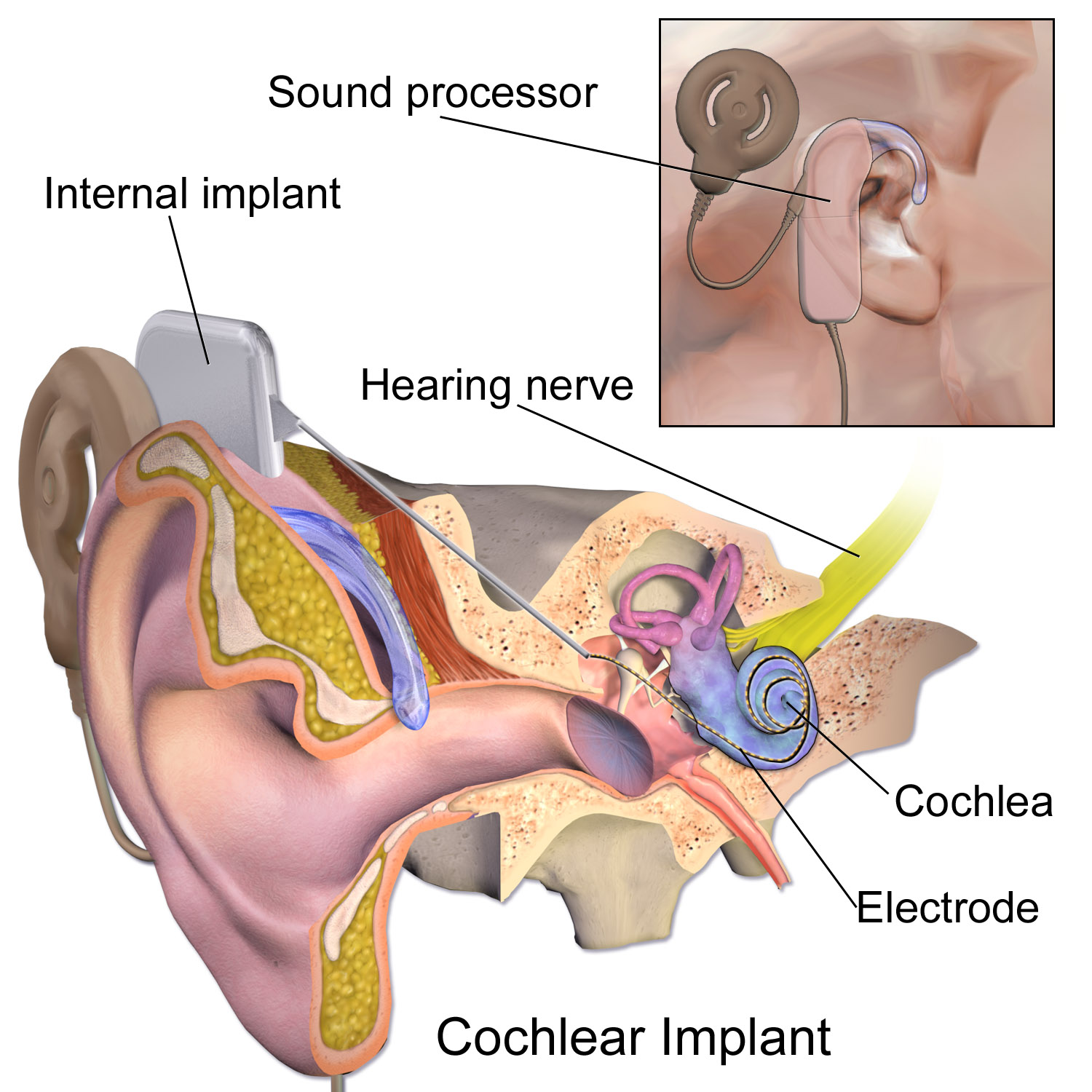
A cochlear implant is an electronic device that bypasses damaged hair cells in children with sensorineural hearing loss and directly stimulates the hearing nerve. Rather than amplifying sound like a hearing aid, the cochlear implant converts sound into electrical signals and delivers them directly to the nerve fibers in the cochlea, allowing the brain to perceive sound even when the hair cells are no longer functional.
The device has two main components. The internal component consists of a receiver and a thin electrode array that is surgically placed inside the cochlea. The external component is a sound processor worn behind the ear that captures sound, processes it, and transmits the information wirelessly to the internal device.
What is Sensorineural Hearing Loss?
Cochlear implants are designed to address a specific type of hearing loss called sensorineural hearing loss.
Sometimes called nerve deafness, sensorineural hearing loss occurs when the tiny hair cells inside the cochlea, the organ of hearing in the inner ear, are damaged or absent. These hair cells are responsible for converting sound vibrations into electrical signals that travel along the hearing nerve to the brain.
When they are no longer functioning, sound cannot be processed normally, regardless of how loud it is.
Sensorineural hearing loss in children can be present from birth due to a congenital abnormality of the ear, an external ear abnormality like Noonan syndrome, or develop later as a result of illness, infection, or injury.
Meningitis is one of the more common causes of acquired sensorineural hearing loss in children, though there are many other contributing factors. This is a different condition from congenital aural atresia, which involves a structural absence of the ear canal and is addressed separately.
When Hearing Aids Are Not Enough
For many children with sensorineural hearing loss, hearing aids and other hearing loss management techniques provide meaningful benefit by amplifying sound. However, for children with severe to profound hearing loss, amplification alone is often not sufficient.
When the hair cells are too damaged to respond even to amplified sound, a hearing aid has little to offer. In these cases, a cochlear implant may be considered.
Who is a Candidate for a Cochlear Implant?
Not every child with hearing loss is a candidate for a cochlear implant surgery. Candidacy is determined through a thorough evaluation process and typically includes children who have severe to profound sensorineural hearing loss in both ears, derive little or no meaningful benefit from hearing aids, are in generally good health, and have families who are committed to the extensive rehabilitation process that follows surgery.
A CAT scan is performed prior to surgery to evaluate the anatomy of the cochlea and confirm there is sufficient space to place the electrode. The special hearing nerve cells, called eighth nerve cells, must also be intact and functional, as the implant works by stimulating these nerves directly.
Age is also a factor. Research consistently shows that children who receive cochlear implants earlier in life, particularly before the age of two to three, tend to develop better speech and language outcomes, as the brain is most adaptable to learning sound during early childhood.
What Does Cochlear Implant Surgery Involve?
Cochlear implant surgery is performed under general anesthetic. The surgeon places the electrode array inside the cochlea through a small opening and positions the electronic receiver package in the bone behind the ear. The procedure typically takes a few hours and most children go home the same day or after a short overnight stay.
The implant is not activated immediately after surgery. A period of healing takes place first, after which the external sound processor is fitted and the device is switched on — a moment many families describe as profoundly emotional.
What Happens After Cochlear Implant Surgery?
Surgery is only the beginning of the journey. Following activation of the implant, children enter an intensive auditory rehabilitation program involving audiologists, speech-language pathologists, and in many cases educators with specialist training in hearing loss for babies.
This therapy teaches the brain to interpret the new signals it is receiving and is absolutely essential to achieving the best possible outcomes.
Progress varies from child to child. Many children go on to develop strong spoken language skills and are able to participate fully in mainstream education. The earlier the implant is received and the more consistent the follow-up therapy, the better the outcomes tend to be.
The Role of a Pediatric ENT in Cochlear Implantation
A pediatric otolaryngologist, an ear, nose, and throat surgeon, plays a central role in the cochlear implant process, from the initial evaluation and candidacy assessment through the surgical procedure itself and long-term follow-up care.
Working alongside audiologists and speech therapists, the ENT surgeon ensures that every aspect of the child’s hearing health is monitored and supported over time.
How MPENTA Can Help
At Michigan Pediatric ENT Associates (MPENTA), we understand how significant a cochlear implant decision is for a family. Our team has the experience and expertise to guide you through every step, from evaluation and candidacy assessment to surgery and post-operative care. We work collaboratively with audiologists and rehabilitation specialists to give your child the best possible foundation for hearing and communication.
If your child has been diagnosed with severe or profound hearing loss and you would like to explore whether a cochlear implant may be appropriate, we encourage you to contact us and schedule a consultation at a location near you.
This information is not intended as a substitute for professional medical care. Always follow your healthcare professional’s instructions. This article was reviewed by ENT specialists.
