
Understanding Laryngeal Cleft: Symptoms, Diagnosis, and Treatment Options
When a child struggles with feeding, experiences frequent respiratory infections, or seems to choke while eating or drinking, parents naturally become concerned.
While many common childhood conditions can cause these symptoms, there are times when an underlying structural difference in the airway and digestive tract may be responsible.
Laryngeal cleft is a rare congenital abnormality that affects the separation between the airway and the esophagus. Because the symptoms can mimic other conditions, like reflux or swallowing disorders, it may not be identified right away.
Understanding the condition, its symptoms, and available treatment options can help families find the appropriate care and support they need.
Understanding the Airway and Esophagus
To understand a laryngeal cleft, it helps to first understand the structure of the throat.
There are two important tubes located in the neck:
- The esophagus, which carries food and liquids from the mouth to the stomach.
- The trachea (windpipe), which carries air to and from the lungs.
At the top of the trachea sits the larynx, commonly known as the voice box. The larynx plays several important roles. It allows us to produce sound, protects the airway during swallowing, and helps prevent food or liquids from entering the lungs.
Normally, the larynx and esophagus are completely separate, ensuring that food and drink travel into the digestive tract while allowing air to travel into the respiratory system.
When this separation does not fully develop before birth, a laryngeal cleft may occur.
What Is a Laryngeal Cleft?
A laryngeal cleft is a rare birth defect in which there is an abnormal opening or gap between the larynx and the esophagus. Because of this opening, food, liquids, and even saliva can pass into the airway rather than traveling safely into the stomach.
This can lead to a variety of feeding, breathing, and respiratory complications.
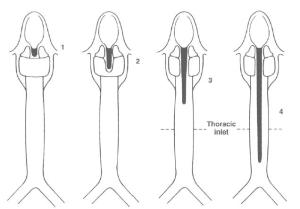
Benjamin and Inglis’ original classification. Leboulanger and Garabédian Orphanet Journal of Rare Diseases 2011 6:81
The severity of a laryngeal cleft depends on the size and extent of the gap. Some children experience only mild symptoms, while others may have significant breathing and feeding difficulties that require surgical intervention.
Types of Laryngeal Clefts
Laryngeal clefts are classified into four types based on how far the opening extends. As the type number increases, the cleft becomes more extensive and potentially more serious.
Type 1 Laryngeal Cleft
A Type 1 laryngeal cleft is the mildest form of the condition.
The gap is located above the vocal cords and does not extend into the lower structures of the larynx. While symptoms can still occur, they are often milder than those associated with more severe clefts.
Some children with Type 1 clefts may be managed conservatively without surgery, depending on their symptoms and overall health.
Type 2 Laryngeal Cleft
A Type 2 cleft extends below the vocal cords and into the lower cartilage of the voice box.
Because the opening is larger, children are more likely to experience swallowing difficulties, aspiration, and respiratory symptoms.
Type 3 Laryngeal Cleft
In a Type 3 cleft, the opening extends through the voice box and into the trachea.
Children with this type of cleft often experience more significant feeding and breathing challenges and may require surgical repair to prevent ongoing complications.
Type 4 Laryngeal Cleft
Type 4 is the most severe form of laryngeal cleft.
The gap extends deep into the trachea and, in some cases, may reach the lower portions of the windpipe. These children often face serious airway and feeding difficulties and typically require complex medical and surgical management.
Common Symptoms of a Laryngeal Cleft
Because a laryngeal cleft affects both swallowing and breathing, symptoms can vary considerably from one child to another.
In some cases, symptoms may be present immediately after birth. In others, the condition may not become apparent until feeding difficulties or recurrent respiratory illnesses develop.
Common signs and symptoms include:
- Coughing During Feeding: Children may cough frequently while drinking or eating because liquids or food enter the airway.
- Choking Episodes: Choking during feedings is one of the more common signs of a laryngeal cleft. Parents may notice their child appearing distressed, sputtering, or struggling during meals.
- Difficulty Breathing: Some children experience shortness of breath or increased effort while breathing, particularly during feeding.
- Poor Weight Gain: When feeding becomes difficult or unsafe, children may struggle to consume enough calories to support healthy growth and development.
- Hoarseness: Because the larynx is involved, some children develop a persistently hoarse or weak voice.
- Noisy Breathing: A condition known as stridor, which produces a high-pitched or noisy sound during breathing, may occur.
- Apnoea: Some children experience brief pauses in breathing, particularly during sleep or feeding.
- Frequent Respiratory Infections: When food or liquids repeatedly enter the lungs, irritation and infection can develop. This can result in recurrent respiratory illnesses such as bronchitis or pneumonia.
- Aspiration: Aspiration occurs when food, liquid, or saliva enters the airway and lungs instead of the esophagus. Repeated aspiration can lead to chronic lung problems and infections.
- Gastroesophageal Reflux (GERD): Many children with laryngeal clefts also experience gastroesophageal reflux disease (GERD), which can worsen feeding and airway symptoms.
Why Early Diagnosis Matters
Early diagnosis is important because ongoing aspiration and respiratory complications can affect a child’s growth, development, and overall health. Identifying the underlying cause allows healthcare providers to create a treatment plan that addresses both feeding safety and airway protection.
Because the symptoms of a laryngeal cleft overlap with many other childhood conditions, diagnosis can sometimes be delayed.
Initially, some Children may be treated for reflux, asthma, recurrent pneumonia, or swallowing disorders before a laryngeal cleft is identified.
How Is a Laryngeal Cleft Diagnosed?
A definitive diagnosis of a laryngeal cleft requires a specialized airway evaluation performed in an operating room setting.
During this procedure, the physician carefully examines the larynx, trachea, and surrounding structures while the child is under anesthesia. This allows for a clear and detailed assessment of the airway.
Before this evaluation, additional tests may be recommended to investigate symptoms and assess swallowing function.
These tests may include:
- Swallow studies
- Imaging tests
- Airway evaluations
- Feeding assessments
- Reflux evaluations
These examinations help physicians determine whether aspiration is occurring and identify any associated abnormalities.
Treatment Options for Laryngeal Cleft
Treatment depends on several factors, including the type of cleft, the severity of symptoms, and the child’s overall health.
Conservative Management
Not every child with a laryngeal cleft requires surgery.
Children with small Type 1 clefts and mild symptoms may be managed through careful monitoring and supportive therapies.
Conservative treatment may include:
- Feeding modifications
- Thickened liquids
- Swallowing therapy
- Reflux management
- Regular follow-up appointments
The goal is to reduce aspiration risk while monitoring for any worsening symptoms
Surgical Repair
When aspiration persists or respiratory complications become significant, surgery may be recommended.
The procedure, known as laryngeal cleft repair, closes the abnormal opening between the airway and esophagus.
Advances in surgical techniques have improved outcomes significantly, allowing many children to experience safer swallowing and fewer respiratory complications following treatment.
The specific surgical approach depends on the type and severity of the cleft.
Following surgery, children may require additional feeding therapy and follow-up evaluations to ensure proper healing and function.
Outlook for Children with Laryngeal Cleft
While a diagnosis of laryngeal cleft can feel overwhelming for families, many children experience excellent outcomes with appropriate treatment and ongoing care.
Advances in diagnostic tools, surgical techniques, and multidisciplinary care have greatly improved the ability to manage this condition effectively.
Early recognition of symptoms, accurate diagnosis, and timely intervention can help reduce complications and support healthy growth, development, and quality of life.
How MPENTA Can Help with Laryngeal Cleft
If your child experiences persistent choking during feeds, recurrent respiratory infections, unexplained aspiration, or ongoing feeding challenges, a thorough evaluation by a pediatric airway specialist may be recommended.
At Michigan Pediatric ENT Associates (MPENTA), our team has extensive experience evaluating and treating laryngeal cleft and supporting families throughout the process.
For evaluation, reach out for a consultation!
