
Sleep Disordered Breathing in Children
If your child snores regularly, breathes through their mouth at night, or seems unusually tired during the day, they may be experiencing sleep-disordered breathing; a common but often overlooked condition in children that can affect their overall development.
The good news is that with early evaluation and the right treatment, most children see significant improvement.
What Is Sleep-Disordered Breathing?
Sleep-disordered breathing (SDB) is a group of conditions that cause partial or complete obstruction of the airway during sleep.
It can range from mild snoring to more serious conditions, such as obstructive sleep apnea (OSA), where breathing repeatedly becomes blocked during sleep.
Many parents assume snoring is harmless, but regular snoring and disrupted breathing during sleep can affect a child’s overall health and well-being. Poor-quality sleep can impact growth, behavior, concentration, learning, and daytime energy levels.
Early recognition and treatment of sleep-disordered breathing can make a significant difference in your child’s health and development.
Signs and Symptoms of Sleep-Disordered Breathing
Children with sleep-disordered breathing may experience a variety of symptoms, including:
- Loud or frequent snoring
- Chronic mouth breathing
- Restless or disrupted sleep
- Pauses in breathing during sleep
- Frequent waking or unusual sleeping positions
- Daytime sleepiness or fatigue
- Difficulty concentrating or focusing
- Irritability or behavioral concerns
- Learning difficulties or poor school performance
Not every child will have all of these symptoms, and some children may seem energetic during the day despite having poor-quality sleep at night.
What Causes Sleep-Disordered Breathing?
One of the most common causes of sleep-disordered breathing in children is enlarged tonsils, enlarged adenoids, or both.
When these tissues become enlarged, they can partially block the airway during sleep, making it more difficult for your child to breathe normally.
This airway obstruction can lead to snoring, mouth breathing, restless sleep, and, in some cases, obstructive sleep apnea.
Over time, chronic mouth breathing can also affect facial and dental development. Children who breathe primarily through their mouths may develop higher-arched palates and changes in dentoskeletal growth and development.
Why Early Evaluation Is Important
Sleep-disordered breathing is more than a nighttime concern. Untreated breathing problems during sleep can affect several aspects of a child’s health, including:
- Sleep quality and daytime functioning
- Growth and development
- Attention, behavior, and school performance
- Cardiovascular health
- Facial growth and dental development
Because breathing and facial development are closely connected, our pediatric ENT team frequently works alongside dentists and orthodontists to provide coordinated, comprehensive care.
What Is the Role of Orthodontics?
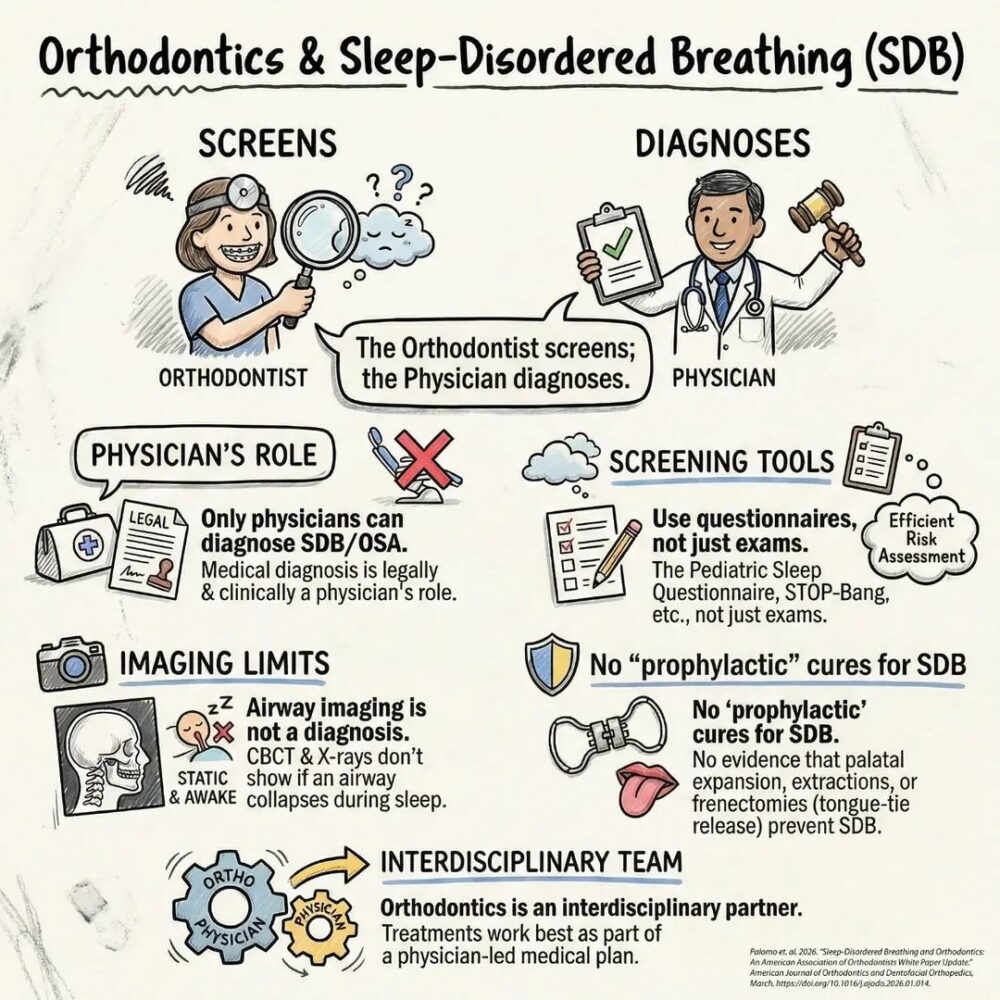
Orthodontists play an important role in identifying signs that may suggest sleep-disordered breathing, such as mouth breathing, snoring, or daytime fatigue. However, only a physician, such as an ENT specialist or sleep physician, can diagnose sleep-disordered breathing and obstructive sleep apnea.
The American Association of Orthodontists (AAO) notes that orthodontic treatment alone does not prevent sleep-disordered breathing.
In certain situations, treatments such as palatal expansion may be considered as part of a broader treatment plan, particularly when a child has both a narrow palate and confirmed obstructive sleep apnea.
However, these treatments are not considered stand-alone therapies for obstructive sleep apnea.
How Is Sleep-Disordered Breathing Diagnosed?
Diagnosis begins with a thorough discussion of your child’s symptoms and sleep history.
Your physician will ask about symptoms such as:
- Snoring
- Mouth breathing
- Restless sleep
- Witnessed pauses in breathing
- Daytime tiredness
- Behavioral or attention concerns
A physical examination is then performed to evaluate the size of the tonsils and other potential causes of airway obstruction.
Depending on your child’s symptoms and examination findings, additional testing may be recommended. This may include:
- A nasal endoscopy to evaluate the adenoids and nasal passages
- A polysomnogram (sleep study) to assess breathing patterns and confirm obstructive sleep apnea
These evaluations help determine the severity of the condition and guide treatment recommendations.
Treatment Options for Sleep Disordered Breathing in Children
Treatment depends on your child’s symptoms, examination findings, and any testing that has been performed.
Some children may benefit from medication management to reduce inflammation and improve nasal breathing. For children with significantly enlarged tonsils or adenoids causing airway obstruction, surgical treatment may be recommended, including:
For many children, addressing enlarged tonsils and adenoids can significantly improve breathing, sleep quality, behavior, and overall quality of life.
Team-Based Care
Because sleep, breathing, facial growth, and dental development are closely linked, caring for children with sleep-disordered breathing often involves collaboration between pediatric ENT specialists, sleep physicians, dentists, orthodontists, and primary care providers.
A coordinated approach helps ensure that all aspects of your child’s health and development are considered.
When Should You Seek Evaluation?
If your child snores regularly, breathes through their mouth, sleeps restlessly, seems unusually tired during the day, or has concerns with attention or behavior, it is worth discussing these symptoms with your physician.
Early diagnosis and treatment can improve sleep, support healthy growth and development, and help your child thrive.
Contact MPENTA
If you are concerned about your child’s sleep, breathing, or chronic mouth breathing, the team at Michigan Pediatric Ear Nose and Throat Associates (MPENTA) is here to help.
Our specialists provide comprehensive evaluations for sleep-disordered breathing and work closely with families and other healthcare providers to develop personalized treatment plans.
Contact MPENTA today to request an appointment.
